Short answer: a battery is the better choice if you have solar (or plan to), your outages are usually hours rather than days, and you want quiet, automatic backup that also lowers your SCE bill under Net Billing. A Generac standby generator is the better choice if you need to run the whole house, air conditioning included, through multi-day outages, and you have natural gas or room for a propane tank. Many Antelope Valley homes in Public Safety Power Shutoff areas end up with both. Here is how to decide.
Start with your outages
SCE may shut off power on circuits in high fire risk areas during hot, dry, windy weather, and those shutoffs can last more than a day. Foothill communities around Leona Valley, Acton, Lake Hughes, Green Valley and parts of the Littlerock and Juniper Hills area see this far more often than central Palmdale and Lancaster, where outages tend to be shorter equipment or heat-related events.
Two questions do most of the work: how long is a bad outage at your address, and what must stay on during it? A family with a medical device and a refrigerator has different needs than a family that wants the AC running through a two-day shutoff in August.
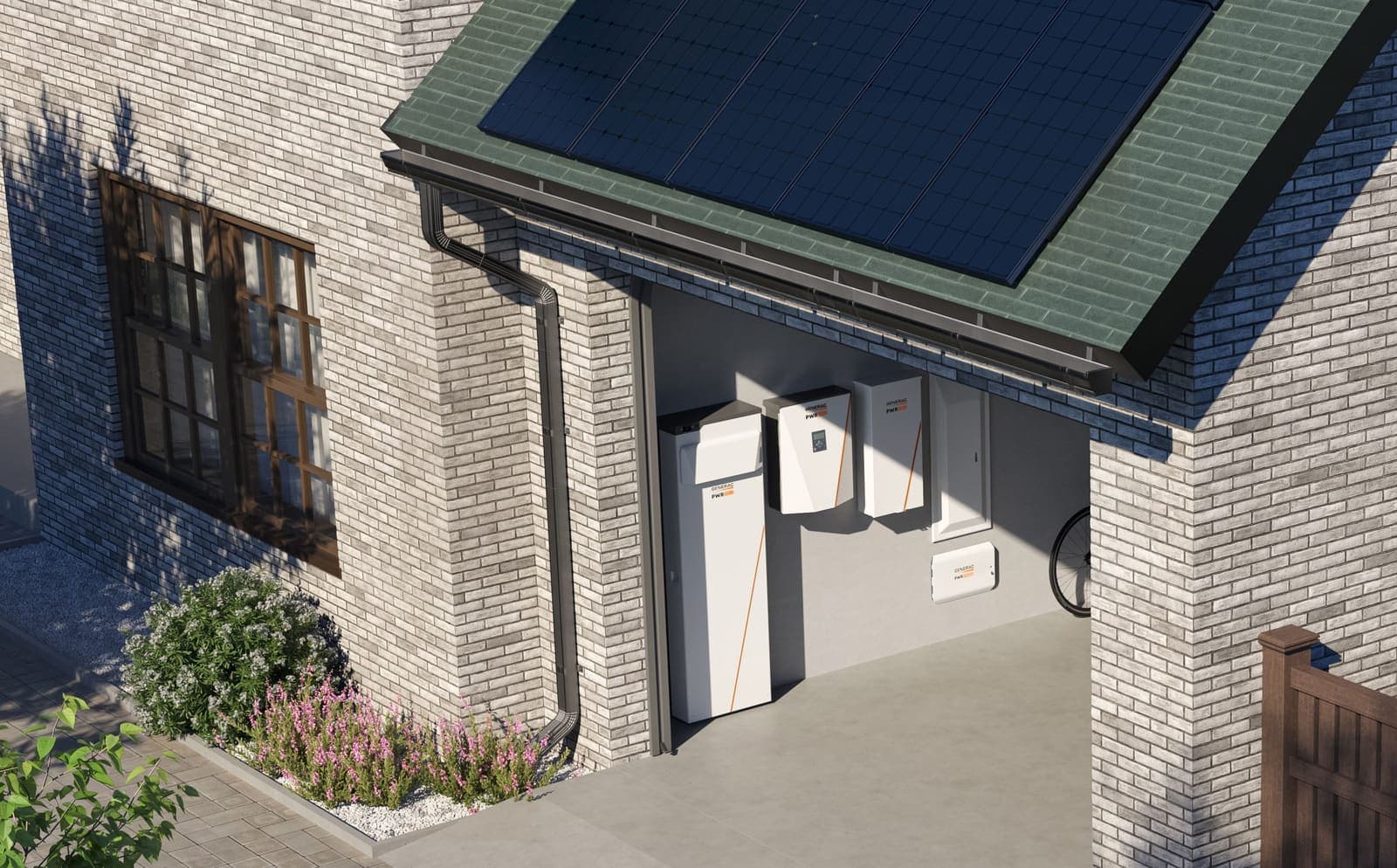
Home batteries
What they do well
- Silent, instant, automatic. Switchover is fast enough that most electronics never notice. There is no engine, no exhaust and nothing to hear at 2 a.m.
- Daily savings, not just backup. Under SCE’s Net Billing, a battery stores midday solar that would otherwise be exported for a low credit and discharges it during the 4–9 p.m. peak. It works for you every day, not just during outages. See our NEM 3.0 explainer.
- Recharges from the sun. Paired with solar, a battery can keep cycling through an extended outage as long as the panels produce and the loads are managed.
- Rebates may apply. SGIP offers battery rebates when budgets are open, with the largest amounts reserved for income-qualified households and homes in high fire-threat districts or with repeated PSPS events. Check status on our incentives page.
Where they fall short
- Capacity is finite. A typical residential battery holds about 13–15 kWh. Central air conditioning on a 105°F afternoon can pull several kilowatts continuously, which empties one battery in a few hours. Whole-home coverage with AC usually takes two or more units.
- Cloudy days and winter. Recharge depends on solar production. A multi-day outage in a winter storm is the hardest case for a battery-only system.
- Up-front cost. Storage is the biggest add to a solar quote, though it changes the daily economics as described above.
Generac standby generators
What they do well
- Runs the whole house, indefinitely. An air-cooled Generac in the 22 kW class can carry a typical home including central air, and on natural gas it runs as long as the gas flows. On propane, tank size sets the limit.
- Weather does not matter. Night, clouds, dust storms: the generator does not care.
- Automatic transfer. An automatic transfer switch starts the unit within seconds of an outage and returns to grid power when it comes back. Generac’s Mobile Link lets you check status from your phone.
- Lower cost per kilowatt of backup. For large loads over long durations, a generator is usually the cheaper way to buy capacity.
Where they fall short
- Noise and exhaust. It is an engine. Placement must respect setbacks from windows and property lines, and your neighbors will hear it.
- Fuel. A 22 kW unit consumes a meaningful amount of natural gas or propane per hour at load. Fuel is a running cost during every outage, and propane tanks need refilling.
- Maintenance. Oil, filters, spark plugs and a battery for the starter need periodic service. Generac units run scheduled self-tests; a certified dealer can handle the annual maintenance.
- No bill savings. A generator only runs when the grid is down. It does nothing for your SCE bill the other 99% of the year.
- No incentives. There is no federal or California incentive for a standby generator, and SGIP does not cover them.
Side by side
| Factor | Home battery | Generac standby generator |
|---|---|---|
| Runtime | Limited by capacity; extends with solar recharge | Limited by fuel supply; indefinite on natural gas |
| Whole-home with AC | Usually needs multiple units | Yes, sized correctly |
| Noise | Silent | Audible engine |
| Daily bill savings | Yes, under NEM 3.0 | No |
| Maintenance | Minimal; firmware and inspection | Annual service, fuel, oil, filters |
| Incentives | SGIP when budgets are open | None |
| Fuel dependency | None | Natural gas line or propane tank |
Which one for which home
Choose a battery if you are installing or already have solar, your outages are typically a few hours, and you care about noise, emissions and cutting the monthly bill. This describes most homes in central Palmdale and Lancaster.
Choose a generator if you are on a PSPS-prone circuit, need air conditioning or a well pump through multi-day outages, have a medically necessary load, or have no interest in solar. Natural gas service makes this an easy call; propane is workable with a properly sized tank.
Choose both if you want the battery’s silence and savings day to day, with the generator as the long-outage backstop. The battery handles the first hours; the generator carries the days. Designing the transfer switching so both systems cooperate is where a licensed electrical contractor earns their keep.
SunCoast is a Generac Certified Dealer and Installer and also installs battery systems from Tesla, Enphase and FranklinWH, so we have no reason to push one over the other. Financing with fixed monthly payments and $0-down programs is available for either; details are on the financing page. Start with our generator page or battery storage page, or call and describe your last bad outage.
Sources
- SCE: What is a Public Safety Power Shutoff
- CPUC: Public Safety Power Shutoffs
- Generac: 22 kW home standby generator (fuel types, Mobile Link, warranty)
- Assurance Power Systems: Generac fuel consumption by model
- SCE: How Solar Billing Plans work
- CPUC: Participating in SGIP (equity and resiliency eligibility)