Short answer: from a signed contract to permission to operate, a typical residential solar project in the Antelope Valley takes about six to twelve weeks, sometimes longer with a battery. The install itself is one to two days. The rest is design, permitting, inspection and waiting for Southern California Edison to approve interconnection. Here is where each week goes and what you can do to keep it moving.
The timeline at a glance
| Stage | Typical duration | Who controls it |
|---|---|---|
| Site survey and final design | 1–2 weeks | Installer, with your input |
| Building permit | Same day to 3 weeks | City or county |
| SCE interconnection application | Runs in parallel with permitting | Installer submits; SCE reviews |
| Installation | 1–2 days | Installer |
| Building inspection | A few days to 2 weeks | City or county |
| Permission to operate (PTO) | 10 business days stated for standard projects; longer with storage | SCE |
Week by week
Signing to final design
After you sign, a technician measures the roof, photographs the attic and rafters, checks the main electrical panel and confirms shading. The design is then finalized with exact panel placement and a single-line electrical diagram. If the survey turns up something the sales design missed (a 100-amp panel, a roof that needs repair, a gas line in the way of the conduit run), this is when it gets resolved, and it is the most common reason a project pauses early.
Permits
The City of Palmdale accepts SolarAPP+, the NREL-built automated review platform, for eligible single-family and duplex rooftop systems, treating them as express permits with no plan review. Kern County, which covers Rosamond and California City, also offers SolarAPP+. For those projects the permit can be issued the same day the application clears. Projects that fall outside SolarAPP+ eligibility (commercial, multi-family, some battery configurations, structural work) go through the standard portal and take longer. Unincorporated Los Angeles County communities such as Littlerock and Leona Valley are handled by county Building and Safety.
SCE interconnection application
We submit the interconnection request to SCE while the permit is in process so the two do not stack. SCE reviews the equipment, the system size and how it connects to their service. If anything is missing you get a deficiency notice, and the review restarts when it is corrected. Submitting a complete package the first time matters more than anything else on this list.
Installation
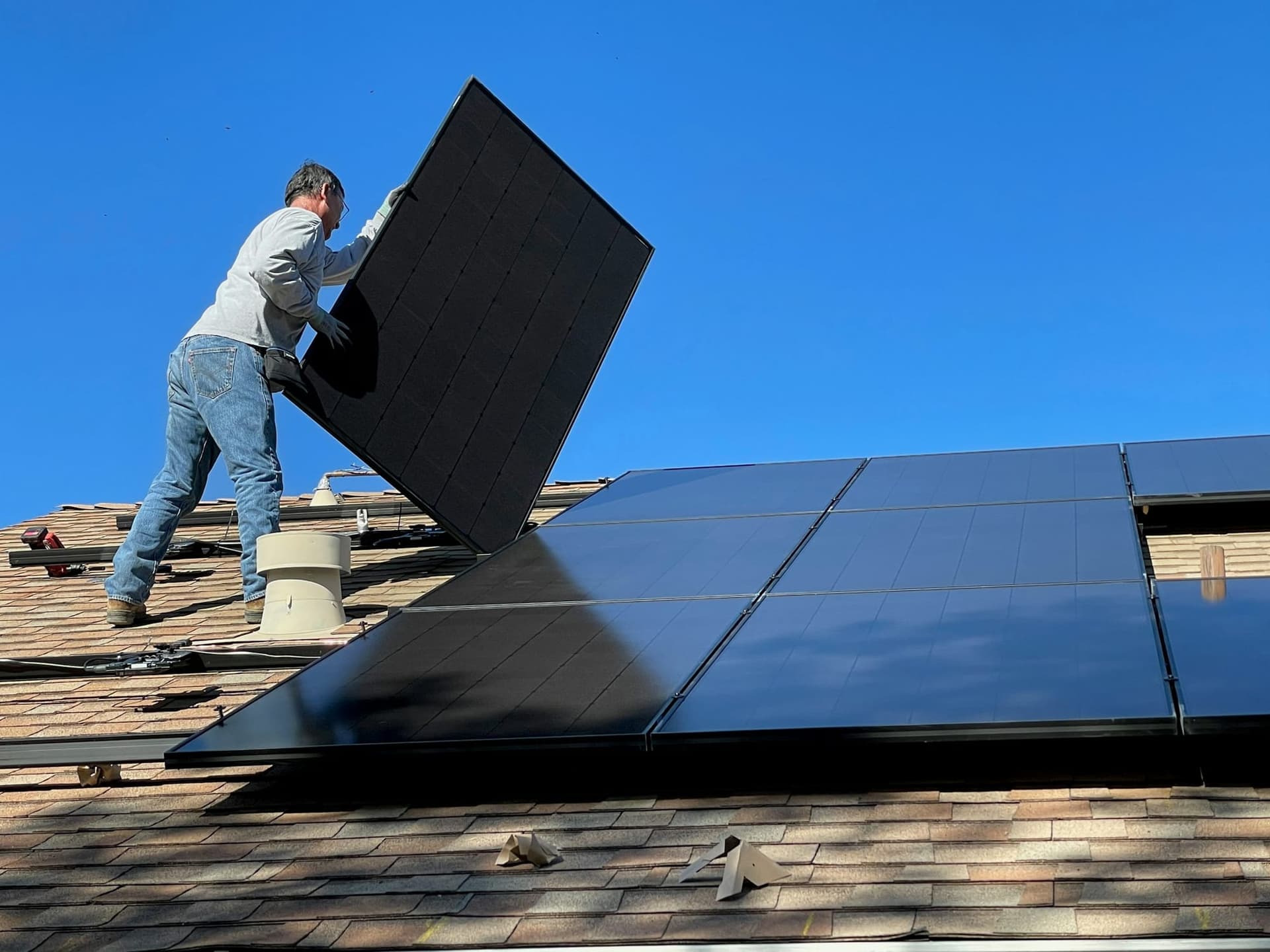
Racking and panels go on first, then the inverter or microinverters, conduit, the disconnects and, if included, the battery and any transfer equipment. Most homes are done in one day; tile roofs, batteries and main panel upgrades push it to two. The crew confirms the plan with you before install day. Details are on our residential solar page.
Building inspection
The city or county inspector verifies that the installed system matches the permit set: attachments, wiring, labeling, grounding, setbacks and the disconnect location. Scheduling depends on the jurisdiction’s backlog. A clean inspection closes the permit; a correction notice means a fix and a re-inspection.
Permission to operate
Once the permit is finaled, we send SCE the closing package. SCE states that it issues PTO for most standard interconnection projects within 10 business days of a complete package, and that projects with paired storage or non-standard metering need additional technical and engineering review. In practice, installers across Southern California reported longer waits in early 2026, particularly on battery projects. SCE may also need to swap or reprogram your meter. When PTO arrives, we turn the system on, set up monitoring and walk you through the app. Your Solar Billing Plan enrollment and TOU-D-PRIME rate begin from there.
After permission to operate
The first full SCE bill after PTO can look odd. Solar Billing Plan customers move to TOU-D-PRIME, the billing cycle may reset, and the first statement often covers a partial month. Give it two full cycles before judging the numbers, and compare kilowatt-hours bought and exported, not just the dollar total. Your monitoring app shows production from day one; we check it remotely during the first weeks to confirm every panel and, if installed, the battery’s time-of-use schedule are doing what the design said they would.
What makes it faster
- Have your SCE account number and a recent bill ready. The interconnection application needs them exactly as SCE has them on file.
- Decide on the battery up front. Adding storage after the permit is filed means a revised permit and a revised interconnection application.
- Fix the roof first if it needs it. A reroof mid-project is the longest delay we see.
- Respond quickly to document requests. Signatures on the interconnection agreement and the CPUC consumer protection guide are required before SCE will proceed.
- Keep the driveway and attic access clear on install day. Simple, but it saves hours.
What makes it slower
- A main panel upgrade, which is its own permit and inspection and can require SCE to de-energize the service.
- HOA architectural approval. California law limits what HOAs can require, but many still want a submittal.
- Deficiency notices from SCE for mismatched equipment or missing documents.
- Inspector backlogs during the summer rush, when everyone in the valley wants solar before the heat.
- Ground-mount or structural work that needs an engineer’s stamp.
Planning around the calendar
If you want the system producing through summer, start in late winter or early spring. A project signed in March is usually operating by June. A project signed in July often does not see PTO until September, after the most expensive bills have already arrived. The 2026 incentive picture, including the property-tax exclusion for systems completed before January 1, 2027, is on our incentives page; payment options with fixed monthly payments and $0-down programs are on the financing page.
We install throughout Palmdale, Lancaster, Littlerock, Rosamond and California City, and we will give you a written schedule at signing that names each of these steps.
Sources
- City of Palmdale: SolarAPP+ express permits for eligible rooftop solar
- Kern County Public Works: SolarAPP+ streamlined permitting
- SCE: Solar FAQ (PTO within 10 business days for standard projects; storage needs additional review)
- GreenLancer: SCE PTO delays and interconnection guide (installer-reported 2026 timelines)
- CPUC: California Solar Consumer Protection Guide (signature required for interconnection)
- California SB 710: active solar energy system exclusion sunset January 1, 2027